Contemporaneous, David Bloom - Dylan Mattingly: The Wild Heart (Complete) [VINYL]
This item will be released on Friday 26th June. It will be shipped to arrive on or around the release date.
‘Mattingly’s score does nothing but linger, luxuriating in the good and the bad, the spiritual and the doubtful, and above all the ecstatic … [he] has internalized a wealth of musical styles … But Mattingly doesn’t quote. Instead, his influences surface subtly, abstracted in, say, a rhythmic gesture. In the end, the language is entirely his own.’ - New York Times“Dylan Mattingly is a true original whose music fills the listener with a sense of overflowing abundance. Dylan’s default mode is intense, ecstatic: his music clangs and chimes, and its resonances seem to linger in the ear long after the physical sound ceases. Events can feel like they're moving in slow sync with the rhythms of the celestial orbs but then will break out into some euphoric pagan jig. He’s a genuine American Maverick in the true sense of the term.” – John Adams Nonesuch Records releases The Wild Heart, the label debut from composer Dylan Mattingly, The Wild Heart, performed by Contemporaneous with conductor David Bloom and vocal soloist Iarla Ó Lionáird. The album comprises the five-movement work The Transmutation Notebooks as well as Sunt Lacrimae Rerum (these are the tears of things). (The vinyl edition features two movements from The Transmutation Notebooks: ‘Ulysses Dances’ and ‘Last Dance’.) The two pieces on this album sprang from Mattingly’s six-hour epic composition History of Life, which, as Jake Wilder-Smith says in his album liner note, “weaves together a wide array of traditions, styles, and source materials, chief among them Homer’s Odyssey and Charles Darwin’s account of his five-year expedition aboard the HMS Beagle.” The Transmutation Notebooks takes its name from Darwin’s journals of his travels along the coast of South America. Sunt Lacrimae Rerum (these are the tears of things) was written during the first year of the pandemic, while wildfires blazed in Mattingly’s native California. Mattingly says, “The goal of my music is to give us an experience of the things we love most about being alive in this world, in a way that reminds us how damn beautiful they are and how much we can love.” He continues, “We don’t have a lot of opportunity in life (or in art) to focus on, to yell for joy about, the things we really love about this world. This music tries to give us that chance as clearly and strongly as possible, to remind us that this is worth it, to allow us to be swept over by the massive force of waves, to be small in the face of a massive, beautiful universe.” Speaking of his unique compositional style, the composer says, “everything on this album has at least one re-tuned piano, and the harp is re-tuned in The Transmutation Notebooks, too. Many of the notes have literally never been heard before. But because they’re on these instruments where we expect the tuning to be fixed, like a piano, our brain instantly accepts them, and says, ‘OK, I guess this is the world.’ In that instant act of transformation, your brain tells you that you’re hearing something entirely new, that you’re in an alien world. That puts us in this state of mind where we hear everything new. So then the music gives us the things we all love - I, IV, V chords (the music that’s at the heart of everything, the harmonic language we were born into) - but in this state of receptivity, we hear it as if for the first time. The things we love so much about the world feel suddenly present and alive, not a reference to some other time, or thousand times, we’ve heard them, but joyfully new.” Iarla Ó Lionáird - one of the leading contemporary vocalists of the traditional sean nós Irish song style - is featured on two movements from The Transmutation Notebooks. (Mattingly first heard the singer on Donnacha Dennehy’s Nonesuch recording of Grá agus Bas). Mattingly considers Ó Lionáird to be a “modern-day Homeric bard,” singing in an “imagined tradition of oral epic, as if it had evolved continuously over 2700 years.” Mattingly began work on Sunt Lacrimae Rerum in the fall of 2020, as he looked out on a smoke-darkened day during the already fraught Covid period. He thought of Aeneas’ lines from Homer’s The Aeneid: sunt lacrimae rerum, et mentem mortalia tangunt. / Solve metus; feret haec aliquam tibi fama salutem. (These are the tears of things, the stuff of lives touches my soul. / Release your fear: our story carries some salvation.) Wilder-Smith says, “In these ancient lines, the composer recognized ‘a statement of profound optimism’ in the face of personal and collective loss. So while Sunt Lacrimae Rerum may have emerged in a moment of great loss and uncertainty, it is no elegy … it strives to sound out a world not yet in existence, released from the haze of present anxieties and past defeats. “ Dylan Mattingly is a composer who creates music that offers ecstatic, transformative experience. Many of his projects exist on a massive scale, the results of his pursuit of projects from the wild reaches of his imagination. This practice was informed by the decade-long process of creating, developing, and bringing to life Stranger Love, his six-hour opera, commissioned by the LA Phil, that premiered in 2023 at Walt Disney Concert Hall. Mattingly’s music also has been commissioned and performed by the Ojai Music Festival, the Cabrillo Festival of Contemporary Music, the Berkeley Symphony, the Del Sol String Quartet, Sarah Cahill, Kathleen Supové, the Albany Symphony, Contemporaneous, ZOFO Duet, John Adams, Marin Alsop, and many others. He has been Musical America’s New Artist of the Month and was awarded the Charles Ives Scholarship by the American Academy of Arts and Letters, among other honors. Mattingly has held residencies at the Ucross Foundation and the Harrison House Arts & Ecology Center. Dylan Mattingly also is the executive and co-artistic director of the new-music ensemble Contemporaneous - a group of twenty-five musicians whose mission is to bring to life the most transformative music by living composers through performances, commissions, recordings, and educational programs. In the tradition of the ensembles founded by Philip Glass, Meredith Monk, and Steve Reich early in their careers, the ensemble has mastered a body of music whose idiosyncratic demands and epic proportions do not fit neatly into the institutional calendars of symphony orchestras or traditional opera companies. Described as “exact and detailed, but also lively and openly dancing” by the New York Times and “leading new music towards its better self” by I Care If You Listen, Contemporaneous particularly champions the creation of large-scale works and “dream projects,” which composers might not otherwise have opportunities to realize due to scale. Based in New York City and active throughout the United States, Contemporaneous has premiered more than 200 new works, and has been presented by institutions such as Carnegie Hall, Lincoln Center, Park Avenue Armory, the Los Angeles Philharmonic, Walt Disney Concert Hall, PROTOTYPE Festival, Merkin Concert Hall, MATA Festival, St. Ann’s Warehouse, and Bang on a Can. The ensemble has worked with artists such as David Byrne, Donnacha Dennehy, Iarla Ó Lionáird, Dawn Upshaw, and Julia Wolfe.
Product Information
Product Information
Shipping & Returns
Shipping & Returns
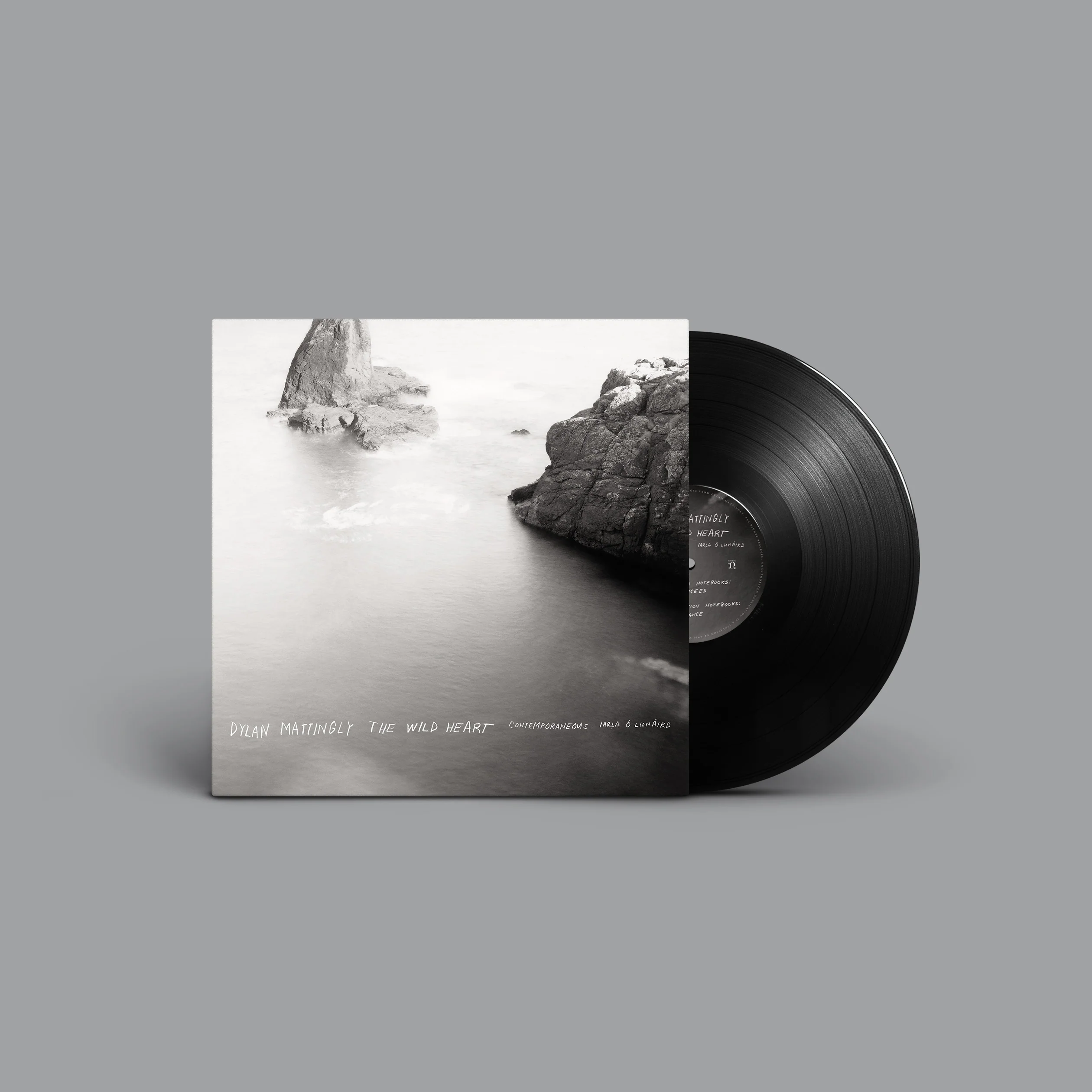
Contemporaneous, David Bloom - Dylan Mattingly: The Wild Heart (Complete) [VINYL]
Contemporaneous, David Bloom - Dylan Mattingly: The Wild Heart (Complete) [VINYL]
This item will be released on Friday 26th June. It will be shipped to arrive on or around the release date.
‘Mattingly’s score does nothing but linger, luxuriating in the good and the bad, the spiritual and the doubtful, and above all the ecstatic … [he] has internalized a wealth of musical styles … But Mattingly doesn’t quote. Instead, his influences surface subtly, abstracted in, say, a rhythmic gesture. In the end, the language is entirely his own.’ - New York Times“Dylan Mattingly is a true original whose music fills the listener with a sense of overflowing abundance. Dylan’s default mode is intense, ecstatic: his music clangs and chimes, and its resonances seem to linger in the ear long after the physical sound ceases. Events can feel like they're moving in slow sync with the rhythms of the celestial orbs but then will break out into some euphoric pagan jig. He’s a genuine American Maverick in the true sense of the term.” – John Adams Nonesuch Records releases The Wild Heart, the label debut from composer Dylan Mattingly, The Wild Heart, performed by Contemporaneous with conductor David Bloom and vocal soloist Iarla Ó Lionáird. The album comprises the five-movement work The Transmutation Notebooks as well as Sunt Lacrimae Rerum (these are the tears of things). (The vinyl edition features two movements from The Transmutation Notebooks: ‘Ulysses Dances’ and ‘Last Dance’.) The two pieces on this album sprang from Mattingly’s six-hour epic composition History of Life, which, as Jake Wilder-Smith says in his album liner note, “weaves together a wide array of traditions, styles, and source materials, chief among them Homer’s Odyssey and Charles Darwin’s account of his five-year expedition aboard the HMS Beagle.” The Transmutation Notebooks takes its name from Darwin’s journals of his travels along the coast of South America. Sunt Lacrimae Rerum (these are the tears of things) was written during the first year of the pandemic, while wildfires blazed in Mattingly’s native California. Mattingly says, “The goal of my music is to give us an experience of the things we love most about being alive in this world, in a way that reminds us how damn beautiful they are and how much we can love.” He continues, “We don’t have a lot of opportunity in life (or in art) to focus on, to yell for joy about, the things we really love about this world. This music tries to give us that chance as clearly and strongly as possible, to remind us that this is worth it, to allow us to be swept over by the massive force of waves, to be small in the face of a massive, beautiful universe.” Speaking of his unique compositional style, the composer says, “everything on this album has at least one re-tuned piano, and the harp is re-tuned in The Transmutation Notebooks, too. Many of the notes have literally never been heard before. But because they’re on these instruments where we expect the tuning to be fixed, like a piano, our brain instantly accepts them, and says, ‘OK, I guess this is the world.’ In that instant act of transformation, your brain tells you that you’re hearing something entirely new, that you’re in an alien world. That puts us in this state of mind where we hear everything new. So then the music gives us the things we all love - I, IV, V chords (the music that’s at the heart of everything, the harmonic language we were born into) - but in this state of receptivity, we hear it as if for the first time. The things we love so much about the world feel suddenly present and alive, not a reference to some other time, or thousand times, we’ve heard them, but joyfully new.” Iarla Ó Lionáird - one of the leading contemporary vocalists of the traditional sean nós Irish song style - is featured on two movements from The Transmutation Notebooks. (Mattingly first heard the singer on Donnacha Dennehy’s Nonesuch recording of Grá agus Bas). Mattingly considers Ó Lionáird to be a “modern-day Homeric bard,” singing in an “imagined tradition of oral epic, as if it had evolved continuously over 2700 years.” Mattingly began work on Sunt Lacrimae Rerum in the fall of 2020, as he looked out on a smoke-darkened day during the already fraught Covid period. He thought of Aeneas’ lines from Homer’s The Aeneid: sunt lacrimae rerum, et mentem mortalia tangunt. / Solve metus; feret haec aliquam tibi fama salutem. (These are the tears of things, the stuff of lives touches my soul. / Release your fear: our story carries some salvation.) Wilder-Smith says, “In these ancient lines, the composer recognized ‘a statement of profound optimism’ in the face of personal and collective loss. So while Sunt Lacrimae Rerum may have emerged in a moment of great loss and uncertainty, it is no elegy … it strives to sound out a world not yet in existence, released from the haze of present anxieties and past defeats. “ Dylan Mattingly is a composer who creates music that offers ecstatic, transformative experience. Many of his projects exist on a massive scale, the results of his pursuit of projects from the wild reaches of his imagination. This practice was informed by the decade-long process of creating, developing, and bringing to life Stranger Love, his six-hour opera, commissioned by the LA Phil, that premiered in 2023 at Walt Disney Concert Hall. Mattingly’s music also has been commissioned and performed by the Ojai Music Festival, the Cabrillo Festival of Contemporary Music, the Berkeley Symphony, the Del Sol String Quartet, Sarah Cahill, Kathleen Supové, the Albany Symphony, Contemporaneous, ZOFO Duet, John Adams, Marin Alsop, and many others. He has been Musical America’s New Artist of the Month and was awarded the Charles Ives Scholarship by the American Academy of Arts and Letters, among other honors. Mattingly has held residencies at the Ucross Foundation and the Harrison House Arts & Ecology Center. Dylan Mattingly also is the executive and co-artistic director of the new-music ensemble Contemporaneous - a group of twenty-five musicians whose mission is to bring to life the most transformative music by living composers through performances, commissions, recordings, and educational programs. In the tradition of the ensembles founded by Philip Glass, Meredith Monk, and Steve Reich early in their careers, the ensemble has mastered a body of music whose idiosyncratic demands and epic proportions do not fit neatly into the institutional calendars of symphony orchestras or traditional opera companies. Described as “exact and detailed, but also lively and openly dancing” by the New York Times and “leading new music towards its better self” by I Care If You Listen, Contemporaneous particularly champions the creation of large-scale works and “dream projects,” which composers might not otherwise have opportunities to realize due to scale. Based in New York City and active throughout the United States, Contemporaneous has premiered more than 200 new works, and has been presented by institutions such as Carnegie Hall, Lincoln Center, Park Avenue Armory, the Los Angeles Philharmonic, Walt Disney Concert Hall, PROTOTYPE Festival, Merkin Concert Hall, MATA Festival, St. Ann’s Warehouse, and Bang on a Can. The ensemble has worked with artists such as David Byrne, Donnacha Dennehy, Iarla Ó Lionáird, Dawn Upshaw, and Julia Wolfe.
Original: $54.68
-65%$54.68
$19.14Product Information
Product Information
Shipping & Returns
Shipping & Returns
Description
This item will be released on Friday 26th June. It will be shipped to arrive on or around the release date.
‘Mattingly’s score does nothing but linger, luxuriating in the good and the bad, the spiritual and the doubtful, and above all the ecstatic … [he] has internalized a wealth of musical styles … But Mattingly doesn’t quote. Instead, his influences surface subtly, abstracted in, say, a rhythmic gesture. In the end, the language is entirely his own.’ - New York Times“Dylan Mattingly is a true original whose music fills the listener with a sense of overflowing abundance. Dylan’s default mode is intense, ecstatic: his music clangs and chimes, and its resonances seem to linger in the ear long after the physical sound ceases. Events can feel like they're moving in slow sync with the rhythms of the celestial orbs but then will break out into some euphoric pagan jig. He’s a genuine American Maverick in the true sense of the term.” – John Adams Nonesuch Records releases The Wild Heart, the label debut from composer Dylan Mattingly, The Wild Heart, performed by Contemporaneous with conductor David Bloom and vocal soloist Iarla Ó Lionáird. The album comprises the five-movement work The Transmutation Notebooks as well as Sunt Lacrimae Rerum (these are the tears of things). (The vinyl edition features two movements from The Transmutation Notebooks: ‘Ulysses Dances’ and ‘Last Dance’.) The two pieces on this album sprang from Mattingly’s six-hour epic composition History of Life, which, as Jake Wilder-Smith says in his album liner note, “weaves together a wide array of traditions, styles, and source materials, chief among them Homer’s Odyssey and Charles Darwin’s account of his five-year expedition aboard the HMS Beagle.” The Transmutation Notebooks takes its name from Darwin’s journals of his travels along the coast of South America. Sunt Lacrimae Rerum (these are the tears of things) was written during the first year of the pandemic, while wildfires blazed in Mattingly’s native California. Mattingly says, “The goal of my music is to give us an experience of the things we love most about being alive in this world, in a way that reminds us how damn beautiful they are and how much we can love.” He continues, “We don’t have a lot of opportunity in life (or in art) to focus on, to yell for joy about, the things we really love about this world. This music tries to give us that chance as clearly and strongly as possible, to remind us that this is worth it, to allow us to be swept over by the massive force of waves, to be small in the face of a massive, beautiful universe.” Speaking of his unique compositional style, the composer says, “everything on this album has at least one re-tuned piano, and the harp is re-tuned in The Transmutation Notebooks, too. Many of the notes have literally never been heard before. But because they’re on these instruments where we expect the tuning to be fixed, like a piano, our brain instantly accepts them, and says, ‘OK, I guess this is the world.’ In that instant act of transformation, your brain tells you that you’re hearing something entirely new, that you’re in an alien world. That puts us in this state of mind where we hear everything new. So then the music gives us the things we all love - I, IV, V chords (the music that’s at the heart of everything, the harmonic language we were born into) - but in this state of receptivity, we hear it as if for the first time. The things we love so much about the world feel suddenly present and alive, not a reference to some other time, or thousand times, we’ve heard them, but joyfully new.” Iarla Ó Lionáird - one of the leading contemporary vocalists of the traditional sean nós Irish song style - is featured on two movements from The Transmutation Notebooks. (Mattingly first heard the singer on Donnacha Dennehy’s Nonesuch recording of Grá agus Bas). Mattingly considers Ó Lionáird to be a “modern-day Homeric bard,” singing in an “imagined tradition of oral epic, as if it had evolved continuously over 2700 years.” Mattingly began work on Sunt Lacrimae Rerum in the fall of 2020, as he looked out on a smoke-darkened day during the already fraught Covid period. He thought of Aeneas’ lines from Homer’s The Aeneid: sunt lacrimae rerum, et mentem mortalia tangunt. / Solve metus; feret haec aliquam tibi fama salutem. (These are the tears of things, the stuff of lives touches my soul. / Release your fear: our story carries some salvation.) Wilder-Smith says, “In these ancient lines, the composer recognized ‘a statement of profound optimism’ in the face of personal and collective loss. So while Sunt Lacrimae Rerum may have emerged in a moment of great loss and uncertainty, it is no elegy … it strives to sound out a world not yet in existence, released from the haze of present anxieties and past defeats. “ Dylan Mattingly is a composer who creates music that offers ecstatic, transformative experience. Many of his projects exist on a massive scale, the results of his pursuit of projects from the wild reaches of his imagination. This practice was informed by the decade-long process of creating, developing, and bringing to life Stranger Love, his six-hour opera, commissioned by the LA Phil, that premiered in 2023 at Walt Disney Concert Hall. Mattingly’s music also has been commissioned and performed by the Ojai Music Festival, the Cabrillo Festival of Contemporary Music, the Berkeley Symphony, the Del Sol String Quartet, Sarah Cahill, Kathleen Supové, the Albany Symphony, Contemporaneous, ZOFO Duet, John Adams, Marin Alsop, and many others. He has been Musical America’s New Artist of the Month and was awarded the Charles Ives Scholarship by the American Academy of Arts and Letters, among other honors. Mattingly has held residencies at the Ucross Foundation and the Harrison House Arts & Ecology Center. Dylan Mattingly also is the executive and co-artistic director of the new-music ensemble Contemporaneous - a group of twenty-five musicians whose mission is to bring to life the most transformative music by living composers through performances, commissions, recordings, and educational programs. In the tradition of the ensembles founded by Philip Glass, Meredith Monk, and Steve Reich early in their careers, the ensemble has mastered a body of music whose idiosyncratic demands and epic proportions do not fit neatly into the institutional calendars of symphony orchestras or traditional opera companies. Described as “exact and detailed, but also lively and openly dancing” by the New York Times and “leading new music towards its better self” by I Care If You Listen, Contemporaneous particularly champions the creation of large-scale works and “dream projects,” which composers might not otherwise have opportunities to realize due to scale. Based in New York City and active throughout the United States, Contemporaneous has premiered more than 200 new works, and has been presented by institutions such as Carnegie Hall, Lincoln Center, Park Avenue Armory, the Los Angeles Philharmonic, Walt Disney Concert Hall, PROTOTYPE Festival, Merkin Concert Hall, MATA Festival, St. Ann’s Warehouse, and Bang on a Can. The ensemble has worked with artists such as David Byrne, Donnacha Dennehy, Iarla Ó Lionáird, Dawn Upshaw, and Julia Wolfe.